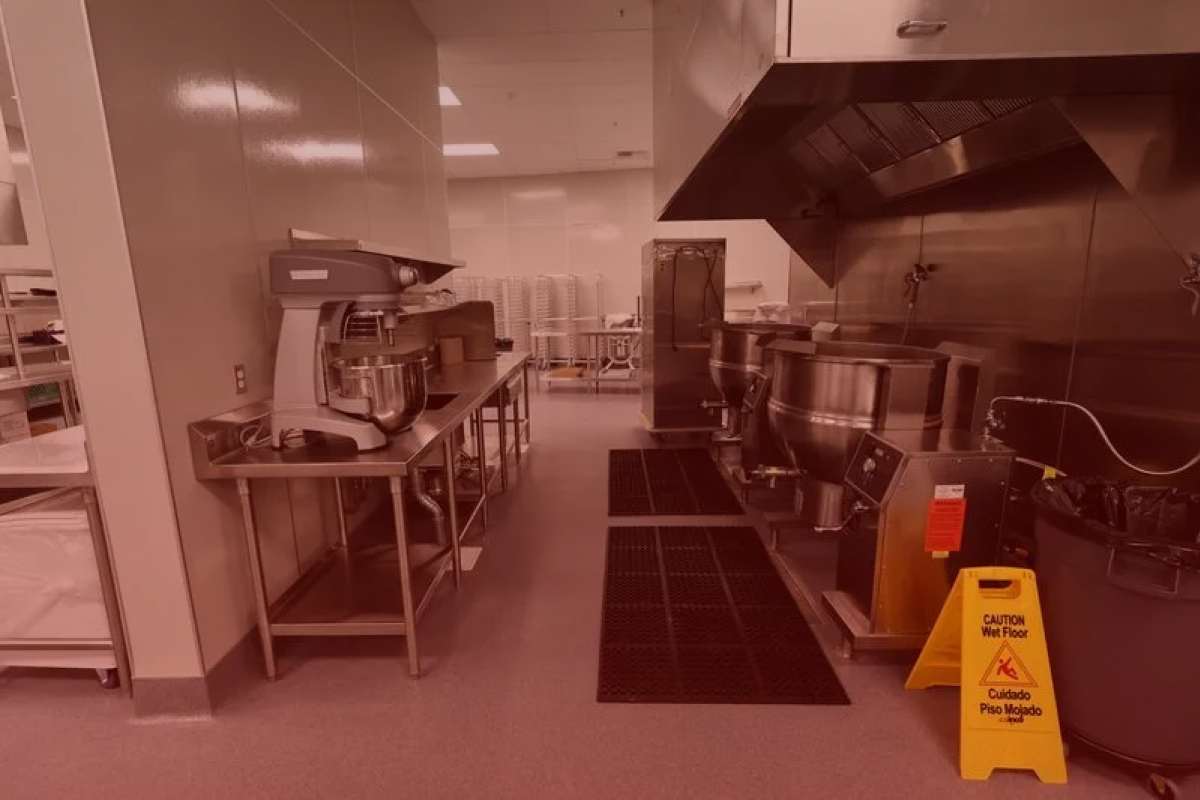
Flooring Requirements for Commercial Kitchens, Cafeterias & Dining Spaces
Commercial kitchens and institutional dining facilities require specialized flooring systems designed for safety, hygiene, and long-term durability. Unlike typical commercial spaces, these environments are exposed to grease, water, thermal shock, heavy equipment, and aggressive cleaning chemicals.
Because of these conditions, flooring in food-service environments must meet strict performance standards established by FDA food safety guidelines, OSHA workplace safety regulations, and ADA accessibility requirements.
This guide explains the key flooring requirements for commercial kitchens, cafeterias, and dining halls, including the best materials, regulatory benchmarks, and long-term lifecycle considerations for facility managers and procurement teams.
Why Kitchen Flooring Performance Is Critical
The floor system in a food-service facility is not just a design element, it is a critical operational component that directly impacts:
For this reason, most modern facilities use industrial-grade resinous flooring or heavy-duty tile systems rather than traditional commercial flooring materials.
Core Performance Requirements for Commercial Kitchen Flooring
Commercial kitchen floors must meet several technical performance standards to remain safe and compliant.
Performance Requirement
What It Means
Why It Matters in Commercial Kitchens
Slip Resistance
Floor must maintain traction in wet or greasy conditions
Reduces slip and fall accidents for kitchen staff
Thermal Shock Resistance
Floor withstands rapid temperature changes
Protects flooring from cracking due to hot oil or steam cleaning
Chemical Resistance
Surface resists damage from cleaners and sanitizers
Maintains durability despite daily chemical exposure
Seamless Installation
No grout joints or gaps in the surface
Prevents bacteria and food particles from accumulating
Impact & Load Resistance
Floor supports heavy equipment and dropped items
Prevents cracking under carts, refrigerators, and equipment
Waterproofing
Flooring prevents moisture penetration
Stops mold growth and protects the subfloor
Most building inspectors also require proper drainage slope and seamless transitions at walls and equipment areas.
Anti-Slip & Spill-Resistant Flooring Options
Slip resistance is one of the most important safety requirements in commercial kitchens. Grease, water, and food spills create high-risk walking conditions, especially during peak service hours.
Most facilities use flooring systems with embedded aggregates such as quartz or aluminum oxide to maintain traction even when wet.
Best Flooring Types for Commercial Kitchens
Flooring Type
Best For
Key Advantages
Typical Lifespan
Urethane Cement
Cook lines, heavy production kitchens
Handles thermal shock, chemicals, and heavy equipment
15–20+ years
Quartz Epoxy Flooring
Food prep and service areas
Slip resistant, seamless, and durable
10–15 years
Quarry Tile
Traditional restaurant kitchens
Extremely durable and heat resistant
30+ years
Rubber Flooring
Cafeterias and dining halls
Comfortable underfoot and sound absorbing
20–25 years
Luxury Vinyl Tile (LVT)
Dining areas and serving spaces
Attractive design with moderate durability
10–15 years
Among these, urethane cement flooring is widely considered the most durable solution for heavy-duty kitchens, because its thermal expansion rate closely matches concrete.
This allows the system to withstand temperature swings exceeding 150°F without cracking or delaminating.
Flooring Requirements by Kitchen Zone
Different areas within a food-service facility experience different types of stress. A zone-based flooring specification strategy improves durability and lifecycle performance.
Kitchen Zone
Primary Requirements
Recommended Flooring System
Main Benefit
Cook Line
Thermal shock resistance and slip resistance
Urethane Cement
Handles hot oil, grease, and heavy equipment
Dishwashing Area
Constant moisture resistance
Urethane Cement or Epoxy
Prevents water damage and bacterial buildup
Food Preparation
Hygienic seamless surface
Quartz Epoxy Flooring
Easy to sanitize and maintain
Walk-in Coolers
Freeze-thaw durability
Urethane Cement with anti-slip aggregate
Prevents cracking during temperature changes
Cafeteria / Dining Area
Comfort and aesthetics
LVT or Rubber Flooring
Improves comfort and noise control
Using the correct flooring system for each zone dramatically increases service life and reduces maintenance costs.
Cafeteria & Dining Hall Flooring Considerations
While back-of-house kitchens prioritize durability and sanitation, front-of-house dining spaces require a balance of performance and aesthetics.
Key considerations include:
Noise control
Comfort underfoot
Stain resistance
Design flexibility
Popular Cafeteria Flooring Options
Luxury Vinyl Tile (LVT)
LVT has become one of the most popular materials for modern cafeterias because it offers:
Commercial durability
Easy maintenance
Wide design flexibility
Lower lifecycle cost than traditional VCT
Rubber Flooring
Rubber flooring is frequently used in schools, universities, and high-traffic dining halls due to its:
Exceptional slip resistance
Impact absorption
Acoustic performance
High-quality rubber flooring systems can reduce impact sound by up to 22 dB, making them ideal for noisy cafeteria environments.
Cleaning, Sanitation & Durability
Food-service floors must support strict sanitation protocols.
Daily cleaning typically includes:
Applying a commercial degreaser
Scrubbing with mechanical equipment
Removing contaminated water using squeegees or wet vacuums
Seamless flooring systems significantly improve sanitation because they eliminate grout joints where bacteria can accumulate.
Additional design features that improve hygiene include:
Integral cove base (floor curves up the wall)
Proper slope-to-drain installation
Heat-welded seams in sheet vinyl systems
These details help prevent moisture infiltration and microbial growth.
Regulatory Standards for Food-Service Flooring
Commercial kitchen flooring must comply with several regulatory standards governing safety and sanitation.
Regulatory Standard
Requirement
Why It Matters
FDA Food Code
Floors must be smooth, durable, and easily cleanable
Prevents contamination and bacterial growth
USDA Sanitation Standards
Flooring must be non-absorbent and chemical resistant
Ensures hygienic food preparation environments
OSHA 1910.22
Workplace floors must minimize slip hazards
Reduces employee injuries
ANSI A326.3
DCOF ≥ 0.42 slip resistance
Improves traction in wet kitchen environments
ADA Accessibility
Floor must be stable, firm, and slip resistant
Ensures safe accessibility for all staff and visitors
Understanding these standards helps facility managers avoid regulatory violations and liability risks.
Lifecycle Cost Considerations
When selecting commercial kitchen flooring, focusing only on installation cost can be misleading.
A lifecycle cost analysis (LCCA) considers:
Installation costs
Maintenance expenses
Repair frequency
Replacement intervals
Flooring Type
Upfront Cost
Typical Lifespan
Maintenance Level
Long-Term Value
Vinyl Composition Tile (VCT)
Low
10–12 years
High (waxing required)
Poor long-term value
Luxury Vinyl Tile (LVT)
Moderate
10–15 years
Low
Good cost-performance balance
Epoxy Coating
Moderate
5–10 years
Moderate
Moderate lifecycle cost
Urethane Cement
Higher
15–20+ years
Very Low
Excellent long-term value
Quarry Tile
Higher
30+ years
Low
Outstanding durability
Higher-performance flooring systems typically reduce long-term operational costs by minimizing maintenance and replacement cycles.
Frequently Asked Questions
The most common commercial kitchen flooring systems include urethane cement, epoxy flooring, and quarry tile. These materials are designed to withstand heavy equipment, constant moisture, grease exposure, and aggressive cleaning chemicals while maintaining slip resistance and hygiene standards.
Urethane cement flooring with anti-slip aggregates is widely considered the best anti-slip commercial kitchen flooring because it provides excellent traction even in wet or greasy environments while remaining durable under high temperatures and heavy traffic.
Quarry tile is commonly used in commercial kitchens because it is extremely durable and heat resistant. However, grout joints can trap bacteria and require additional maintenance, which is why many modern facilities prefer seamless flooring systems like urethane cement.
Commercial kitchen floors become slippery due to grease buildup, water spills, and food residue. Without proper slip-resistant flooring materials or regular cleaning procedures, these conditions significantly increase the risk of workplace accidents.
Seamless flooring systems such as epoxy or urethane cement are the easiest to clean because they have no grout lines or joints where bacteria and food debris can accumulate. This helps maintain sanitation and simplifies daily cleaning routines.
Commercial kitchen flooring must typically comply with FDA Food Code sanitation requirements, OSHA workplace safety standards, and slip resistance benchmarks such as ANSI A326.3. These regulations ensure that kitchen floors are safe, hygienic, and durable.
Choosing the Right Flooring System
Selecting the right flooring system requires evaluating:
Facility type
Traffic levels
Sanitation requirements
Long-term maintenance costs
A properly specified floor system can last decades while reducing operational risks and maintenance costs.
Commercial Kitchen Flooring Solutions
If you're planning a new kitchen, cafeteria, or dining facility, selecting the right flooring system is critical to ensuring safety, compliance, and long-term durability.
RJ Commercial Flooring specializes in high-performance flooring systems for institutional and commercial facilities, including:




.svg)
.png)