


Educational facilities are no longer designed as purely functional structures. Today, school districts and university planners recognize that the built environment directly influences learning outcomes, faculty satisfaction, and long-term operational costs. Flooring, in particular, plays a critical role in this shift toward a “built to learn” philosophy.
High-performance flooring solutions for schools, colleges, and universities sit at the intersection of durability, acoustics, indoor air quality, safety, and lifecycle cost management. From K–12 classrooms to sprawling university campuses, selecting the right flooring system is no longer a cosmetic decision. It is a strategic infrastructure investment.
This guide explores the core challenges of educational environments, breaks down space-specific flooring recommendations, and explains how institutions can maximise long-term value through informed material selection and expert installation.
Educational buildings face stressors that exceed those of typical commercial spaces. These challenges can be grouped into three primary categories: foot traffic, acoustics, and maintenance logistics.
Hallways, corridors, and common areas function as the arteries of educational facilities. These zones experience thousands of footfalls daily, often concentrated along predictable paths that accelerate wear.
Beyond pedestrian traffic, flooring must withstand:
To perform under these conditions, flooring systems must offer:
Without these characteristics, schools face premature failure, frequent repairs, and rising maintenance costs.
Acoustics are one of the most overlooked aspects of educational design, yet they directly affect speech intelligibility, concentration, and learning retention.
Hard surfaces such as polished concrete or traditional VCT reflect sound, increasing reverberation and background noise. This “cocktail party effect” places a higher cognitive load on students and teachers, particularly those with auditory processing challenges.
Key acoustic metrics include:
Carpet tile and acoustic-backed resilient flooring can reduce impact noise by 15–20 dB, significantly improving classroom and library environments. Many universities now require IIC ratings of 50 or higher in learning spaces.
Maintaining hundreds of thousands of square feet on tight custodial budgets has driven institutions away from high-maintenance flooring systems.
Legacy materials like VCT require frequent stripping and waxing, involving harsh chemicals and labor-intensive processes that negatively affect indoor air quality (IAQ).
Modern educational facilities increasingly favor:
These solutions reduce chemical exposure, improve hygiene, and lower long-term maintenance labor while supporting healthier learning environments.
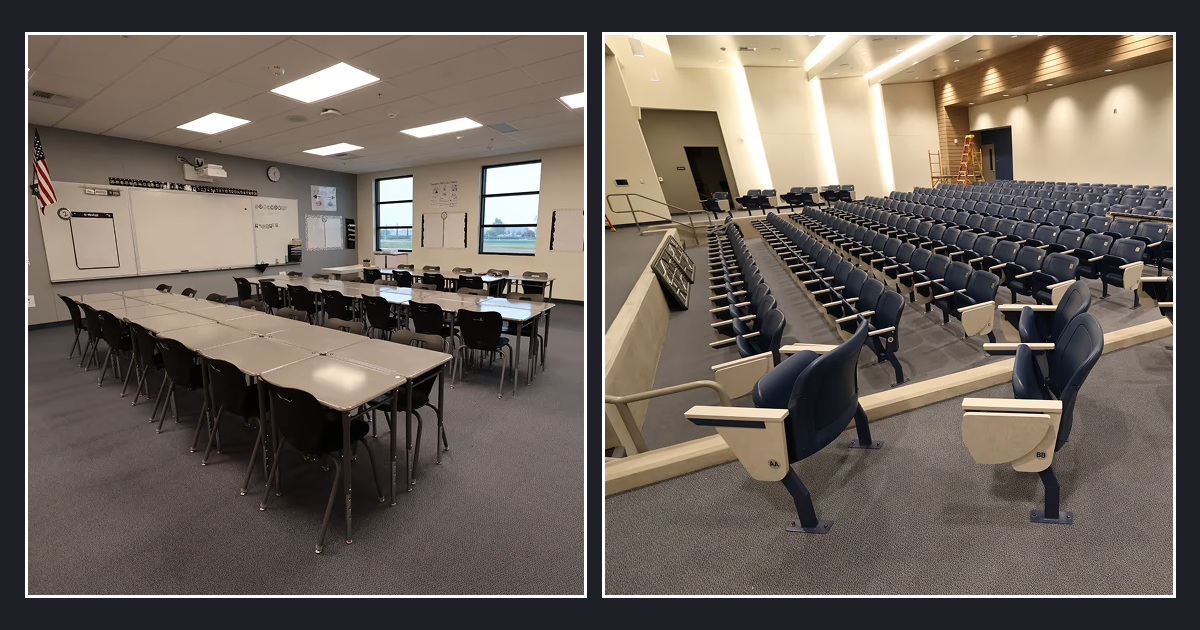
Classrooms and lecture halls must balance comfort, acoustics, durability, and flexibility. Flooring in these spaces often doubles as an informal learning surface, particularly in K–12 settings.
Carpet tile remains a preferred choice for general classrooms and lecture halls due to its ability to:
Modern carpet tiles incorporate moisture barriers and antimicrobial treatments, addressing historical concerns around hygiene and staining. Their modular format also allows for selective replacement, minimizing disruption and repair costs.
In secondary schools and universities, many classrooms are transitioning to luxury vinyl tile (LVT) or luxury vinyl plank (LVP) for their durability and design versatility.
LVT offers:
For science labs, art rooms, and technical classrooms, homogeneous sheet vinyl is often specified. When heat-welded, it creates a seamless, waterproof surface that resists chemicals and supports rigorous cleaning protocols.
Flooring color and pattern increasingly support environmental psychology and space zoning.
Research shows that:
Institutions use these insights to create behavioral zones within classrooms, subtly guiding student activity through visual cues embedded in the floor design.
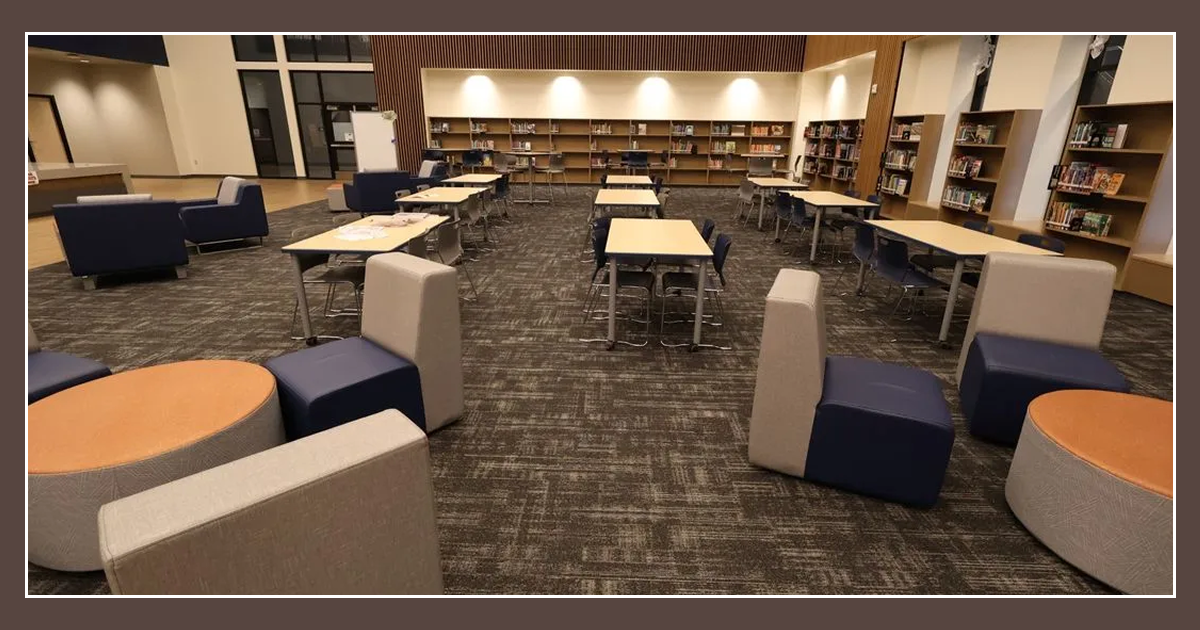
Libraries and study areas have evolved into dynamic learning commons that must support both quiet concentration and collaborative work.
Noise control is paramount in libraries. The rolling of carts, foot traffic, and furniture movement can quickly disrupt quiet environments.
Carpet tile remains the dominant solution due to its superior impact sound reduction. Where hard surfaces are preferred, acoustic vinyl flooring with cushioned backings offers a compromise between cleanability and sound absorption.
Libraries place unique static loads on flooring due to high-density shelving and book stacks that remain in place for decades.
Materials must resist permanent indentation under sustained pressure. Rubber flooring and premium LVT perform well in these conditions, maintaining dimensional stability while supporting heavy loads.
Designers also use flooring patterns and textures for wayfinding, subtly guiding students through stacks and toward service areas.
High-traffic zones demand flooring systems engineered for extreme durability and safety.
Rubber flooring is frequently specified for corridors due to its:
Premium LVT and sheet vinyl with thick wear layers are also common, offering durability with broader design options. In some facilities, seamless epoxy flooring is used to achieve maximum longevity.
Cafeterias combine food spills, moisture, and heavy furniture movement, making hygiene and slip resistance critical.
Common solutions include:
In student unions, facilities often use zoned flooring strategies, combining resilient materials in traffic paths with carpet tile in lounge areas to enhance acoustics and comfort.
Epoxy flooring systems are ideal for:
Their seamless, chemical-resistant surfaces prevent moisture intrusion and microbial growth. Epoxy flake systems also allow customization with school colors while maintaining slip resistance.

The true cost of flooring is measured not by installation price, but by total cost of ownership (TCO) over decades of use.
LCCA evaluates:
Studies consistently show that no-wax resilient flooring, rubber, and linoleum outperform traditional VCT over a 20–30 year period due to reduced labor and chemical use.
Flooring contributes directly to LEED v4.1 and WELL Building Standard credits through:
Beyond compliance, sustainable flooring supports institutional branding by demonstrating environmental stewardship and student well-being.
Even the best materials fail without proper installation. Educational institutions must vet contractors based on experience, technical expertise, and compliance.
Key questions include:
Phased installation plans and detailed maintenance documentation are essential for minimizing academic disruption and protecting long-term performance.
Educational flooring decisions impact budgets, acoustics, safety, and student performance for decades. Choosing the right materials and the right installation partner is essential to protecting that investment.
As a trusted commercial flooring company, RJ Commercial Flooring helps schools, colleges, and universities specify high-performance flooring systems designed for durability, compliance, and lifecycle cost savings.
Explore our Education Flooring Solutions or speak with the RJ Commercial Flooring experts to request a consultation, site assessment, or specification support for your next institutional project.
Let RJ help you create safer, smarter, and more durable leaming spaces.
.svg)

